Pharmacies With Strict Swapping Rules
Some UK weight-loss providers apply stricter switching criteria when you move from another pharmacy or online clinic. This guide explains what "strict swapping" means, which providers are currently flagged, what BMI rules may apply, and how to use the official pharmacy and medicines checks before relying on an online service.
Quick answer
A stricter swapping rule usually means a provider will not simply continue your prescription because another pharmacy accepted you. They may reassess your current BMI, health conditions, dose history, side effects and evidence before accepting a transfer.
Some providers may require BMI 30 or above before accepting a transfer.
Some providers may accept BMI 27 or above with relevant weight-related health conditions.
Providers currently flagged for stricter switching criteria
The providers below are currently flagged by Monj as applying, or being reported to apply, tighter transfer criteria for some weight-management treatment pathways. This is not a criticism or endorsement. It is a practical flag for users who may be declined despite having been accepted elsewhere.
| Provider | Monj flag | What users should check | Evidence status | Last reviewed |
|---|---|---|---|---|
| ASDA | Strict switch flag | Check whether current BMI or BMI 27+ with accepted comorbidities is required when switching. | Provider wording / user evidence review | May 2026 |
| Boots | Strict switch flag | Check whether transfer patients are reassessed against joining criteria rather than previous-provider approval. | Provider wording / user evidence review | May 2026 |
| Superdrug | Strict switch flag | Check BMI, comorbidity and treatment-history wording before starting a transfer consultation. | Provider wording / user evidence review | May 2026 |
| ZAVA | Strict switch flag | Check whether switching rules depend on current BMI, dose history and relevant health conditions. | Provider wording / user evidence review | May 2026 |
| Pharmica | Strict switch flag | Check current transfer wording before relying on being accepted for continuation treatment. | Provider wording / user evidence review | May 2026 |
| More providers | Checking | Monj may add or remove providers as wording changes or stronger evidence is supplied. | Awaiting clearer evidence | Ongoing |
Send Monj screenshots, provider wording or written replies if a provider should be added, removed or updated. We contact pharmacies for clarification where useful, but not every response gives a definitive public answer.
The badge you may see on Monj provider pages
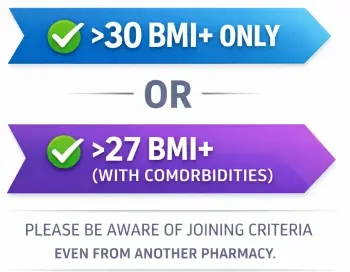
On individual provider pages, Monj may show a stricter switching badge where the provider appears to apply tighter joining or transfer rules. This helps users spot possible restrictions before spending time on a consultation.
What the badge means
This badge means Monj has flagged the provider as potentially applying stricter swapping rules. In plain English, the provider may require BMI 30+ or BMI 27+ with accepted comorbidities before accepting a switch.
It does not mean Monj has approved the provider, and it does not guarantee acceptance. The provider or prescriber still makes the clinical decision.
Why do some pharmacies have stricter switching rules?
Not every pharmacy assesses transfer patients in the same way. Some providers repeat key checks instead of relying on a previous provider's decision.
What can count as a comorbidity for BMI 27+?
A comorbidity is a health condition that may be linked to, worsened by, or clinically relevant to weight. Each provider decides what it accepts and what evidence it needs.
NICE guidance can be a useful reference point, but private provider switching rules may not match NHS access criteria exactly. See NICE TA1026 recommendations.
How to avoid delays when switching
If you are switching to a provider with stricter rules, prepare the basics before starting the consultation.
- Use current details. Have your current height, weight and BMI ready, not only the details from when treatment started.
- Know your dose history. Prepare current dose, previous doses, missed doses, side effects and last supply date.
- List relevant conditions. Include diagnosed conditions, current medicines and any GP-monitored risks.
- Keep evidence available. Some providers may request photographs, previous prescription evidence or record snippets.
Official GPhC and MHRA routes to use
These are the stronger outlinks to use because they help users verify pharmacy registration, check online-service information, and report suspicious sellers or medicine problems.
Search the pharmacy register
Use the official register to check pharmacy premises details and registration status.
Check online health service registration
GPhC explains how users can check registration for online health services.
Buying medicines safely online
GPhC patient guidance explains checks to make before using an online pharmacy service.
Report a suspicious online seller
Use this if you think a website or seller is offering medicines or medical devices illegally.
Check if a site is "Not Recommended"
MHRA provides a checker for websites marked as not recommended.
Report side effects or product problems
Yellow Card is the MHRA route for suspected side effects, adverse reactions and device incidents.
What if you do not meet the stricter switching criteria?
If you are below BMI 30 and do not have accepted comorbidities at BMI 27+, a stricter provider may decline the switch. That does not automatically mean you did anything wrong.
Related Monj guide: Mounjaro maintenance-friendly pharmacies.
Red flags when switching online
These do not prove a provider is unsafe on their own, but they are reasons to pause and check carefully.
- No clear GPhC pharmacy registration details or no way to verify the dispensing pharmacy.
- Approval based only on a very short questionnaire with no meaningful two-way communication.
- No request for current BMI, weight, height, dose history or relevant medical history.
- Heavy pressure to buy quickly, exaggerated claims, or unusually aggressive discount messaging.
- Medicine offered through social media, marketplace listings or "research use only" wording.
Visual reference
The larger explanatory image has been moved lower down the page and placed inside a folded card. The image is still present in the HTML with descriptive alt text, rather than being removed or hidden with CSS.
Open strict switching visual explainer
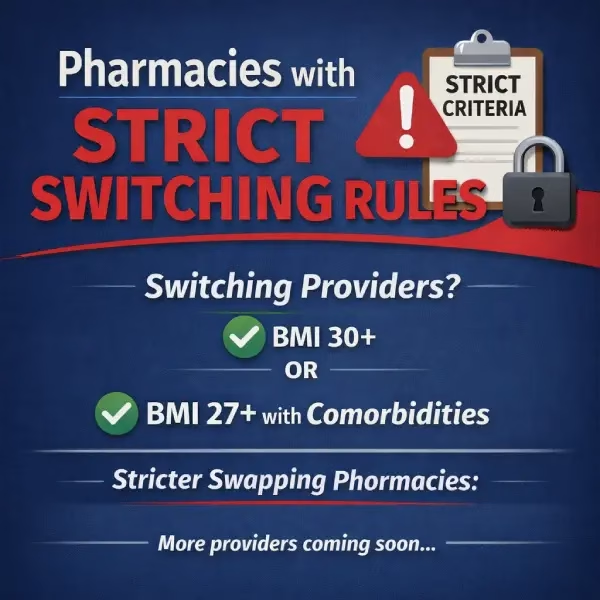
Why this image is folded
The top of the page is now cleaner and more useful for users who want a quick answer. Keeping the image in an expandable card avoids a bulky hero image while still supporting the page topic with relevant visual context.
This is preferable to removing the image completely because the file, caption context and alt text remain available in the page markup.
Strict switching rules: FAQs
What are strict swapping rules?
Does strict switching mean the provider is safer?
Can I switch if my BMI is now below 30?
What evidence might a provider ask for?
Should I change my answers to get accepted?
Help Monj keep this page accurate
If a provider accepted or rejected you because of switching criteria, send Monj the wording, screenshots or evidence. The aim is to help patients understand transfer rules before they waste time, not to shame providers for applying clinical checks.
For broader provider-route comparisons, see Monj's Mounjaro maintenance-friendly pharmacy guide.
This Monj page is general UK consumer guidance. It is not medical advice, not a prescription, not a regulator finding and not a provider endorsement. Always complete consultations honestly and follow advice from an appropriately qualified clinician.
Sources referenced on this page
Linked from the text above:
- NICE TA1026 recommendations www.nice.org.uk
- Open GPhC pharmacy register → www.pharmacyregulation.org
- Read GPhC online-service checks → www.pharmacyregulation.org
- Read GPhC safety guidance → www.pharmacyregulation.org
- Report to MHRA → report-or-check-suspicious-activity.mhra.gov.uk
- Check MHRA status → report-or-check-suspicious-activity.mhra.gov.uk
- Open Yellow Card → yellowcard.mhra.gov.uk
Standing primary references for every Monj page:
- Mounjaro (tirzepatide) Summary of Product Characteristics and Patient Information Leaflet, electronic medicines compendium
- MHRA Drug Safety Update: GLP-1 receptor agonists
- NICE TA1026: tirzepatide for managing overweight and obesity
- General Pharmaceutical Council register of pharmacies
- MHRA Yellow Card scheme