About Monj: independent UK pharmacy price comparison built around real checks.
Monj helps UK patients compare prescription weight-management medicine prices more clearly. The platform shows real checkout-price context, provider validation, plain-English safety notes and advertising-transparency warnings, so users can spot the difference between useful comparison and clever marketing.
Monj is a comparison and information platform, not a pharmacy sales channel.
Monj does not operate as a pharmacy, clinic, prescriber, manufacturer or marketing agency. The site does not sell prescription medicines, issue prescriptions, approve patients for treatment or tell users which provider they must use.
What the platform actually does
The work focuses on prices, provider context, offer wording, validation checks and trust signals. A low-looking deal can hide extra fees, unclear terms, weak verification or affiliate-led promotion, so Monj tries to make those details easier to see.
About Monj Verification: It's not a decorative badge.
Anyone can publish a list of pharmacy links. The harder job involves checking the provider behind the price and stepping back when something does not look right.
How Monj checks providers
Monj reviews official registration details, company information, trading signals, provider claims and pricing structures before presenting a provider as verified. Reviews continue when new information appears, because a provider can change its pricing, terms, ownership signals or service position over time.
Why this matters
This checking work has helped Monj identify suspicious or apparently fake pharmacy-style websites. When the evidence supports escalation, Monj uses appropriate reporting routes so regulators, platforms or other responsible bodies can review the concern and take action where justified.
That work rarely looks glamorous, but it protects users. A table of cheap prices only helps when someone also asks whether the provider behind the price looks real, regulated and accountable.
About Monj: What validation can include
- Physical postal validation, not just online checking.
- Checking pharmacy registration details against official records.
- Looking at the company behind the provider and how it presents itself.
- Reviewing whether fees, delivery costs and offer terms appear clearly.
- Checking whether a site looks like a genuine UK pharmacy or clinic operation.
- Adding caveats where a price, provider or claim needs extra context.
- Escalating suspicious pharmacy-style sites through appropriate reporting routes.
Suspicious pharmacy-style sites
Monj has identified websites that appeared to present pharmacy-style services without enough visible trust signals. The team preserved evidence and raised concerns through relevant reporting channels.
Unclear ownership signals
Provider checks look beyond the homepage. Company details, trading names, registration records and contact routes can reveal whether users can understand who stands behind a service.
Pricing that needs context
Some prices look simple until fees, delivery, dose rules, stock wording or discount conditions appear. Monj adds context so users can compare the fuller picture.
A cheap-looking deal is not always a clear deal.
Prescription weight-management medicines involve more than price. Users also need to understand eligibility, consultation rules, stock, delivery, refund terms and provider accountability.
Headline prices can mislead
A provider may look cheapest before delivery, prescription fees, consultation costs or supply conditions appear. Monj focuses on the fuller price picture.
Not every comparison is neutral
Some sites look independent while they mainly serve paid promotion, lead generation or affiliate income. Users deserve to know the difference.
Checks protect users
Validation helps reduce the risk of unclear, suspicious or poorly evidenced pharmacy-style websites receiving trust they have not earned.
Some comparison pages are really funnels for one company.
A useful comparison page should help users understand the market. Some pages do something very different: they appear to compare multiple options, but in practice they mainly steer users towards one provider, one group of connected sites, or one commercial relationship.
Why that matters
That kind of page can still look helpful. It may use comparison language, star-style claims, “best price” wording, discount tables or calculator tools. The problem starts when the user cannot easily tell whether the page genuinely compares providers or mainly exists to send traffic to a single company.
Monj takes the opposite approach. Providers should not receive prominence because they are commercially convenient. A comparison page should explain its method, show its limitations and make commercial relationships easy to understand.
What Monj means by “real checkout price”.
The online pharmacy market contains many prices that look simple until users reach the final steps. Monj aims to compare the cost a patient is more likely to care about: the amount they may actually pay.
Independent UK pharmacy price comparison should not hide the final bill.
When users compare Mounjaro prices or Wegovy prices through Monj and iGovy, the aim is not to chase the flashiest headline discount. The aim is to make the total cost easier to understand.
Offers need context
First-order codes, returning-customer pricing, subscription claims, bundles, stock notes and delivery wording can all change the real value of a deal. Monj treats those details as part of the comparison, not small print to ignore.
Important: prices can change quickly. Monj can help users compare, but every user should check the provider’s live website and final checkout total before paying.
How Monj is funded, without giving providers control.
Monj may use affiliate links to keep the site free for users and support the work involved in checking prices, providers, offers and regulatory information. When a user applies a code from our discount Mounjaro price list, or clicks through to a provider from Monj, a referral commission may be earned.
Affiliate income does not buy trust
A provider cannot buy the top position, pay Monj to call it “best”, or ask the site to ignore warning signs because a link earns commission. Good comparison needs enough independence to say awkward things.
Listings can change
If a provider changes its fees, uses unclear terms, becomes harder to verify, develops availability issues or needs extra context, Monj can update the listing. That can happen even when the update creates a commercial downside.
Our line in the sand
- Affiliate income does not buy ranking control.
- Paid placement does not decide Monj comparison tables.
- Providers cannot purchase favourable editorial wording.
- Trust concerns can lead to warnings, caveats or removal.
- Users should understand when commercial links are involved.
Some “comparison” pages are promotion pages with a calculator attached.
Referral income is not the problem when a site explains it clearly and compares fairly. Trouble starts when commercial intent stays hidden, rankings go unexplained, or a page presents itself as independent while quietly steering users towards whoever pays.
If you spot misleading pharmacy advertising, report it.
If a website, advert, influencer post, search ad, social post or affiliate page appears misleading, unclear about commercial intent, or dressed up as independent comparison when it mainly promotes a provider, you can complain to the Advertising Standards Authority.
Tip: keep screenshots, URLs, dates, advert wording, influencer posts, search terms, checkout prices and messages that show how the promotion appeared to users.
Helpful comparison feels clear. Sales-led comparison feels slippery.
This checklist shows the standard Monj tries to meet. It also gives users a simple way to assess any medicine comparison page they find online.
Ownership
Commercial links
Provider checks
Rankings
Final price
Funnel risk
Price matters. Clinical suitability matters more.
Prescription weight-management medicines are not normal online purchases. A lower price does not guarantee that treatment suits a patient, that a prescriber will approve it, or that the service will meet the user’s needs.
Use Monj as a starting point
Monj can help with price and provider context. Users should still check the pharmacy or clinic directly, read the terms, understand the consultation process and speak to an appropriate healthcare professional if unsure.
Seek qualified advice
Before starting, stopping or changing treatment, users should speak to a GP, independent prescriber, pharmacist or another qualified healthcare professional.
Useful checks before ordering
- Confirm the final checkout price before paying.
- Check the provider’s official registration details.
- Read the consultation, refund and cancellation terms.
- Check stock, dispatch and cold-chain delivery wording.
- Read the Patient Information Leaflet for the medicine.
- Report suspected side effects through the MHRA Yellow Card Scheme.
Monj came from users trying to make sense of a messy market.
Monj did not start in a boardroom. It grew out of the patient community. In early 2024, community-made Reddit price lists began circulating as users tried to compare Mounjaro costs more honestly and make sense of inconsistent pricing, hidden fees and mixed provider information.
Credit to the early communities
A lot of the early legwork also happened in Facebook groups, where admins, moderators and members spent huge amounts of time comparing providers, sharing real checkout prices and helping others avoid overpaying. People like BodyMission, along with others in Facebook groups who chose to stay anonymous, helped push transparent pricing forward and deserve credit for that work.
Why Monj became more structured
The original community lists had the right spirit: ordinary users helping each other. Monj carries that forward with clearer methodology, ongoing checks, stronger provider validation and a permanent home for independent UK pharmacy comparison data.
Why the early lists mattered
They came from ordinary users trying to protect each other from overpaying. They were not polished, but they were honest. Monj exists to keep that spirit alive while adding structure, validation and accountability.
That wider community spirit also continues through Monjour, where people can discuss Mounjaro, Wegovy and related experiences in a community setting.
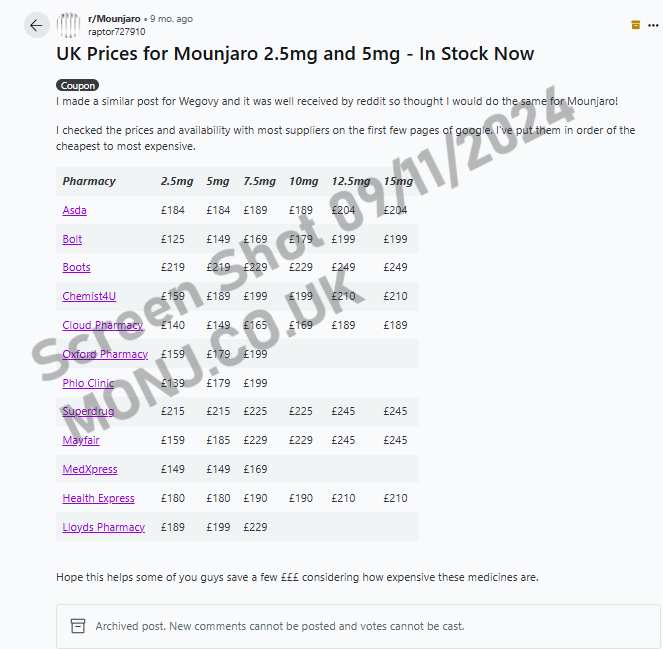
Early community-led price lists, Facebook group discussions and shared price tracking helped inspire Monj.

Nick Johnson
Founder and healthcare pricing analyst
My background is in IT and technical systems, not the pharmaceutical industry. A large part of my work has involved taking fragmented, messy information and turning it into something clearer, more useful and easier to trust.
When I looked closely at the UK market for online weight-management treatment, I saw the same problem at a much higher-stakes level. Prices often sat across several steps, key fees appeared late, and affiliate bias helped decide which providers patients saw first.
I built Monj to make that easier to see. Being outside the pharmacy and manufacturer world is not a weakness; it helps Monj stay independent. The site does not need to protect a clinic, preserve a paid ranking or pretend a headline price tells the full story. Its job is to present clearer data so patients can make better-informed choices.
About Monj: The Charity Pledge
Healthcare comparison tools should support patients, not just commercial margins. Monj operates on a “Community Before Commerce” framework.
Through our Charity Pledge, Monj commits to donating 20% of annual surplus to charity each financial year. For selected providers, the platform may also donate 100% of affiliate earnings generated directly to charitable causes and publish updates to maintain transparency.
Why this matters
Affiliate-funded comparison can easily drift towards chasing clicks. The pledge helps keep a visible public-interest element in the model.
- Keep comparison information free for users.
- Support independent checking and public-interest guidance.
- Reduce reliance on pharmacy-controlled messaging.
- Give something back where the platform generates surplus.
About Monj, validation and independence
Does Monj advertise for pharmacies?
No. Monj is a price comparison and information platform. Affiliate links may help fund the site, but Monj does not act as a marketing agency for pharmacies. Providers cannot buy favourable rankings or pay to receive “best” wording.
What does Monj mean by provider validation?
Provider validation means Monj checks key trust signals before presenting a provider as verified. These checks can include pharmacy registration details, company information, trading signals, provider claims, pricing structure and obvious trust concerns. This process does not create a medical endorsement, but it does create a real review step.
Has Monj found fake or suspicious pharmacy sites?
Yes. Monj’s checking work has helped identify a number of suspicious or apparently fake pharmacy-style websites. Where appropriate, Monj has escalated concerns through relevant reporting routes so regulators, platforms or other responsible bodies can review the evidence and act where justified.
Are some comparison pages just funnels for one company?
Some comparison pages can appear to compare the wider market while mainly steering users towards one provider, one connected group or one commercial relationship. Monj encourages users to check ownership, methodology, affiliate disclosures, ranking logic and whether other providers receive fair coverage.
Can a pharmacy pay to rank higher on Monj?
No. Providers cannot buy ranking positions, paid placement, favourable wording or “best provider” status. Comparison data, price context, validation, availability and relevant trust signals shape visibility.
Does Monj recommend one pharmacy over another?
Monj displays comparison data and context. Users should make their own decision after checking the provider’s current website, registration information, final checkout price, terms and clinical suitability.
What is a disguised advert?
A disguised advert looks independent or editorial but mainly promotes a provider, product or paid relationship without making the commercial intent clear enough. Warning signs include unclear ownership, hidden affiliate links, unexplained rankings, headline-only pricing and pressure language.
Who should I contact about misleading pharmacy advertising?
If a website, advert, influencer post, search ad, social post or affiliate page appears misleading or unclear about commercial intent, you can complain to the Advertising Standards Authority. For suspected paid online scam ads, the ASA also provides a separate online scam-ad reporting form.
Does a Monj listing mean a provider is medically endorsed?
No. A listing on Monj does not amount to a medical endorsement, clinical recommendation or guarantee of service quality. It means Monj has included the provider in a comparison context based on information available at the time.
Does a provider not being listed mean it is unsafe?
No. A provider not being listed does not automatically mean it is unsafe, illegal or illegitimate. Monj may not have reviewed it, may not have enough information, or may not currently include it in its comparison tables.
Medical and regulatory disclaimer
Monj.co.uk is an independent price comparison and information resource. It is not a medical provider. Monj does not offer medical advice, diagnosis, treatment, prescriptions or clinical approvals. All prescription weight-management medicines referenced on this platform are prescription-only medicines.
You should consult your GP, an independent prescriber, a qualified pharmacist or another appropriate healthcare professional before starting, stopping or changing any treatment. Patients should review the official Patient Information Leaflet via the Electronic Medicines Compendium. Any suspected side effects should be reported to your healthcare provider and directly to the MHRA Yellow Card Scheme.
Sources referenced on this page
Linked from the text above:
- Check GPhC registers www.pharmacyregulation.org
- Search EMC leaflets www.medicines.org.uk
- MHRA Yellow Card yellowcard.mhra.gov.uk
Standing primary references for every Monj page:
- Mounjaro (tirzepatide) Summary of Product Characteristics and Patient Information Leaflet, electronic medicines compendium
- MHRA Drug Safety Update: GLP-1 receptor agonists
- NICE TA1026: tirzepatide for managing overweight and obesity
- General Pharmaceutical Council register of pharmacies
- MHRA Yellow Card scheme