How to Spot a Fake Online Pharmacy in the UK
Medicines are not ordinary retail products. Learn how to recognise the warning signs of a fake or misleading online pharmacy, verify providers more carefully, and understand how Monj adds manual checks to help users compare more safely.
Monj is an independent comparison platform, not a pharmacy, prescriber, or regulator.
The Verification Gap: Why Monj Goes Further Than a Badge
There is an important limitation in how many people check online pharmacies: a register match is useful, but it should not be treated as proof that the exact website you are viewing is the genuine operating site.
This creates a risk where misleading or lookalike websites can appear convincing by using real pharmacy details, copied trust signals, or familiar branding.
If you only confirm that a pharmacy exists on a register, you may still miss important context about the website you are actually using. A register match alone should not be treated as proof that the site in front of you is the legitimate operating website.
How Monj Verified Closes the Gap
At Monj, we understand where ordinary users can get caught out. We refuse to rely solely on surface-level checks or easily copied badges.
- Manual Scrutiny: For providers listed on our platform, Monj carries out additional manual checks to check that what a website claims matches the real pharmacy behind it.
- Manual Certificate Checks: Monj checks every listed pharmacy's certificates and registration details manually, not just the badge on the website.
- Beyond the Badge: We review key pharmacy, business, and contact details to reduce reliance on surface-level trust signals.
Monj Verified is designed as an additional trust layer and transparency feature, not a replacement for official checks. We still encourage users to verify providers independently.
Our discount Mounjaro price list sits alongside our wider safety and verification approach. The list is designed to help users compare pricing while keeping verification and transparency in view. Monj links users through to provider details and relevant regulatory information where appropriate, while Monj Verified explains the additional scrutiny we apply to selected providers we highlight.
What is the quickest way to spot a fake pharmacy?
To quickly spot a fake or misleading online pharmacy in the UK, check the full picture rather than relying on a single logo, badge, or claim on the page.
- Verify official registration: Check the pharmacy on the GPhC register in Great Britain. Where relevant, review additional information from the MHRA, CQC, or GMC depending on how the service operates.
- Review prescribing standards: Genuine UK pharmacies require meaningful medical screening for prescription treatments.
- Check contact details: Ensure there is a verifiable UK physical address and clear customer service information.
- Be cautious with unrealistic prices: Treat deals that are significantly cheaper than standard market rates as a warning sign.
- Avoid vague sites: Walk away from providers using high-pressure sales tactics, messaging-only contact methods, or copied trust signals.
In a Hurry? Quick Checks First
Before you provide personal data or payment details, ask yourself these basic safety questions. If something feels wrong, walk away.
Identity & Contact
Can you clearly identify the specific pharmacy behind the website? Is there a real, verifiable address and proper customer service contact information beyond a basic email form?
Medical Scrutiny
Are they offering prescription-only treatments with superficial, easily bypassed, or entirely absent medical checks?
Professional Trail
Can the provider and the prescriber be checked independently? Would you feel comfortable sharing this purchase trail with your NHS GP?
Why Unregulated Pharmacies are a Serious Risk
Online pharmacies are convenient, with discreet access and simple ordering. But medicines are not ordinary ecommerce products.
When you purchase from a cloned pharmacy website or an unregulated provider in the UK, you expose yourself to significant risks:
- Fake Medicine: Products may look authentic but contain entirely different ingredients.
- No Active Ingredients: The medication may lack the necessary active compounds, leaving your condition untreated.
- Incorrect Strength: Doses may be incorrect, making the treatment ineffective or unsafe.
- Unsuitable Prescribing: Without proper medical screening, you may receive a treatment that interacts poorly with your existing health profile.
- Data & Payment Fraud: Misleading sites can capture identity documents and payment details for financial fraud.
Online Pharmacy Warning Signs UK
Deceptive websites are getting more convincing, but some warning signs still point to a higher-risk provider. If you spot any of these, stop and check further.
No Meaningful Consultation
Skipping proper medical screening or relying on a basic tick-box to issue restricted medicines.
Unrealistic Pricing
Prices that are implausibly low compared to trusted providers, often used to encourage quick purchases.
Vague Business Identity
Missing company registration numbers, an absent responsible pharmacist, or obscured ownership details.
Miracle Language
Using pushy, high-pressure terminology, countdown timers, or unrealistic claims about results.
DM-Only Contact
Operating exclusively through social media messaging or hiding clear UK physical contact details.
Bulk Deals on Sensitive Drugs
Offering bulk purchases of strictly controlled treatments without regard for standard dosage limits.
What a Better, Safer Provider Typically Looks Like
A safer, regulated online pharmacy operates with clinical accountability. A trustworthy provider typically:
- Clearly identifies the registered pharmacy dispensing the medication.
- Explains exactly who is prescribing the treatment, such as GMC-registered doctors or independent pharmacist prescribers.
- Carries out appropriate, thorough clinical checks before issuing any prescription.
- Provides clear safety information and patient information leaflets.
- Makes it possible to ask questions to a healthcare professional after ordering.
- Displays regulatory numbers that can be independently checked.
Caution: Higher-Risk Medicines & Weight-Loss Treatments
Treatments such as weight-loss injections are in high demand, making them a target for unregulated sellers. These are prescription-only medicines, not casual purchases. The MHRA has warned that falsified weight-loss medicines found outside legitimate supply routes have contained insulin.
Convenience should never replace proper clinical checks. Always prioritise safety and independent verification over a quick checkout.
What a Genuine Mounjaro KwikPen Should Look Like, And Why Appearance Alone Is Not Enough
Knowing what authentic medication looks like provides helpful context, but modern packaging can be copied. Relying solely on a visual check is not recommended.
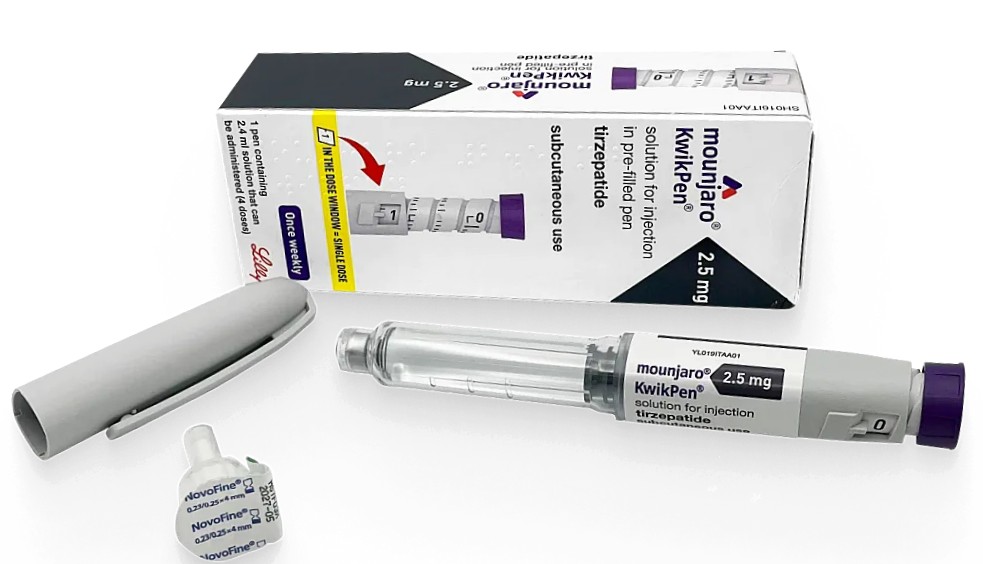
Importantly: Appearance alone should not be treated as proof of authenticity. Product photos can be copied easily, so visual checks should always be considered alongside regulated supply and provider verification.
How to Verify an Online Pharmacy UK: Step-by-Step
Because official registers have limitations, you should build a complete picture of the provider's legitimacy rather than relying on a single claim.
-
Identify the Business
Review the website footer or 'About Us' page to find the registered company name, the trading address, and the name of the superintendent pharmacist.
-
Check the Registers
Check the GPhC register in Great Britain, then read the pharmacy's published inspection report. Our pharmacy score guide explains what each inspection principle means.
-
Review Additional Context
Where relevant, review additional context from the MHRA register and check CQC or GMC information for prescribing services.
-
Look for Extra Scrutiny
Check platforms that provide manual checks, like the Monj Verified list, which adds an extra layer of scrutiny to support your independent verification.
-
Walk Away if Unsure
If pricing seems implausible, if claims feel exaggerated, or if the website feels vague, do not proceed. There are many verified alternatives available.
Who Regulates Online Pharmacies in the UK?
Knowing which UK body checks what makes verification easier:
GPhC
The General Pharmaceutical Council regulates pharmacies, pharmacists, and pharmacy technicians in Great Britain. Checking the GPhC register is an important first step when reviewing an online pharmacy serving Great Britain.
Check the GPhC register.
MHRA
The Medicines and Healthcare products Regulatory Agency oversees medicines safety. Its register of authorised online sellers can provide additional context when checking whether a website is allowed to sell medicines online.
Check the MHRA register.
CQC
The Care Quality Commission inspects health and social care services in England, which includes clinics offering online prescribing.
CQC Guidance.
GMC
The General Medical Council maintains the official register of medical doctors. If an online provider states that doctors prescribe your medicine, their registration can be checked here.
Check the GMC register.
What to Do if You Are Worried
If you suspect you have engaged with a misleading online pharmacy or received a counterfeit product, consider these practical steps:
- Stop Using the Product: Do not use the medicine if you have concerns about the packaging, its appearance, or how it makes you feel.
- Retain Information: Keep all packaging, receipts, emails, and take screenshots of the website and correspondence.
- Seek Medical Advice: Speak with a high-street pharmacist, your GP, or contact NHS 111 if you feel unwell. Find verified information on the NHS website.
- Use Official Reporting Routes: Report suspicious sellers via the MHRA reporting tool, and report unexpected side effects via the MHRA Yellow Card scheme.
Frequently Asked Questions
How can I spot a fake pharmacy online?
To quickly spot a fake or misleading online pharmacy in the UK, check the full picture rather than relying on a single logo, badge, or claim on the page. Look for warning signs such as a lack of medical consultation, prices that are unrealistically low, hidden contact details, and pushy sales terminology.
How can I check if an online pharmacy is genuine in the UK?
Check the pharmacy on the GPhC register in Great Britain. If an online doctor or prescribing service is involved, review CQC and GMC information where relevant. The MHRA register can provide additional context when checking whether a website is allowed to sell medicines online. Always cross-reference contact details and the wider setup.
Can a website look legitimate and still be misleading?
Yes. Misleading or lookalike websites can appear convincing by using real pharmacy details, copied trust signals, or familiar branding. A register match alone should not be treated as proof that the site in front of you is the legitimate operating website.
Is a very cheap price always a warning sign?
While online pharmacies offer competitive pricing, a price that drastically undercuts the standard UK market rate for prescription medicine is a warning sign. Deals that seem impossibly cheap should be treated with caution.
Is checking a logo or badge enough?
No. A badge image is easy to copy. Cross-reference the website's details against official UK regulatory databases, and remember that cloned identities are a real risk.
Is a product photo enough to prove a medicine is genuine?
Appearance alone should not be treated as proof of authenticity. Product photos can be copied easily, so visual checks should always be considered alongside regulated supply and provider verification.
Why does Monj use manual verification steps?
Because official registers like the GPhC do not typically list website domains, misleading websites can clone legitimate pharmacy details. Monj applies an extra layer of manual scrutiny, checking certificates and business details by hand, to add context and support verification.
What is Monj Verified?
Monj Verified is designed as an additional trust layer and transparency feature, not a replacement for official checks. We still encourage users to verify providers independently. It explains the additional scrutiny we apply to selected providers we highlight.
Helpful Next Steps
If you wish to explore verified treatment options or read further safety guidance, consider these resources:
- Official Guidance: Read the GPhC's advice on buying medicines safely online.
- Compare Safely: Review our discount Mounjaro price list, which sits alongside our wider verification and transparency approach.
- Understand Our Process: See the extra scrutiny applied to providers highlighted as Monj Verified.
Sources referenced on this page
Linked from the text above:
- medical.lilly.com medical.lilly.com
- Check the GPhC register www.pharmacyregulation.org
- Check the MHRA register medicine-seller-register.mhra.gov.uk
- CQC Guidance www.cqc.org.uk
- Check the GMC register www.gmc-uk.org
- NHS website www.nhs.uk
- MHRA reporting tool report-or-check-suspicious-activity.mhra.gov.uk
- MHRA Yellow Card scheme yellowcard.mhra.gov.uk
- buying medicines safely online www.pharmacyregulation.org
Standing primary references for every Monj page:
- Mounjaro (tirzepatide) Summary of Product Characteristics and Patient Information Leaflet, electronic medicines compendium
- MHRA Drug Safety Update: GLP-1 receptor agonists
- NICE TA1026: tirzepatide for managing overweight and obesity
- General Pharmaceutical Council register of pharmacies
- MHRA Yellow Card scheme