Independent UK medicine guidance
Mounjaro stomach pain: what is normal and what is not
Some degree of stomach ache is the rule rather than the exception on Mounjaro. The UK patient leaflet lists abdominal pain as very common when tirzepatide is prescribed for weight management, which means more than 1 in 10 people report it. Most of that pain is a dull, crampy, meal-related discomfort that fades as the body gets used to each dose. A much smaller share is the early signal of pancreatitis or a gallbladder problem, and those need the same day, not the next appointment. This page shows you where the line sits, using the location, character and timing of the pain.
Key facts
- Abdominal pain is very common in weight management (more than 1 in 10 people) according to the UK leaflet revised in August 2026.
- In adults treated for type 2 diabetes it is common (up to 1 in 10). In the type 2 diabetes cardiovascular disease study it was very common. Those figures describe different patients and are not the weight-loss figures.
- Typical Mounjaro discomfort is central, mild to moderate, tied to meals or a dose increase, and eases within hours.
- Pain that is severe, lasts beyond 30 minutes, spreads to the back or the right shoulder, or arrives with fever or vomiting is not typical and needs urgent assessment.
How common is stomach pain on Mounjaro?
The August 2026 revision of the UK leaflet reports side effects separately for each group of patients studied, which is why the same symptom can carry two different labels. If you take Mounjaro for weight loss, the weight-management band is the only one that describes your odds. Articles that quote "common" for stomach pain are usually lifting the diabetes figure, and articles that quote "very common" without saying which group are not telling you much either way.
Why the stomach hurts
Tirzepatide slows the rate at which the stomach empties into the small intestine. That is a large part of how it takes the edge off appetite, but it also means a meal sits in the stomach for longer than you are used to. The stomach stretches, the muscle wall works harder, and the result is fullness, cramp and a heavy ache under the breastbone. Several of the other very common side effects then pile on top:
- Constipation, which produces a low, crampy, bloated ache that is often mistaken for stomach pain but is a bowel problem
- Trapped wind, which can cause sharp, shifting pains that move around the abdomen
- Indigestion and reflux, felt as burning behind the breastbone or in the upper middle of the abdomen
- Nausea and vomiting, which strain the abdominal muscles and leave them sore afterwards
- Eating a portion your stomach could once manage but no longer can
Discomfort peaks in the first two to three weeks and again for a week or so after each dose increase. At a steady dose it usually settles into the background or disappears. If it does not, that is worth telling your prescriber, because dose escalation is supposed to depend on how well you tolerate the dose you are on.
Reading the pain by location
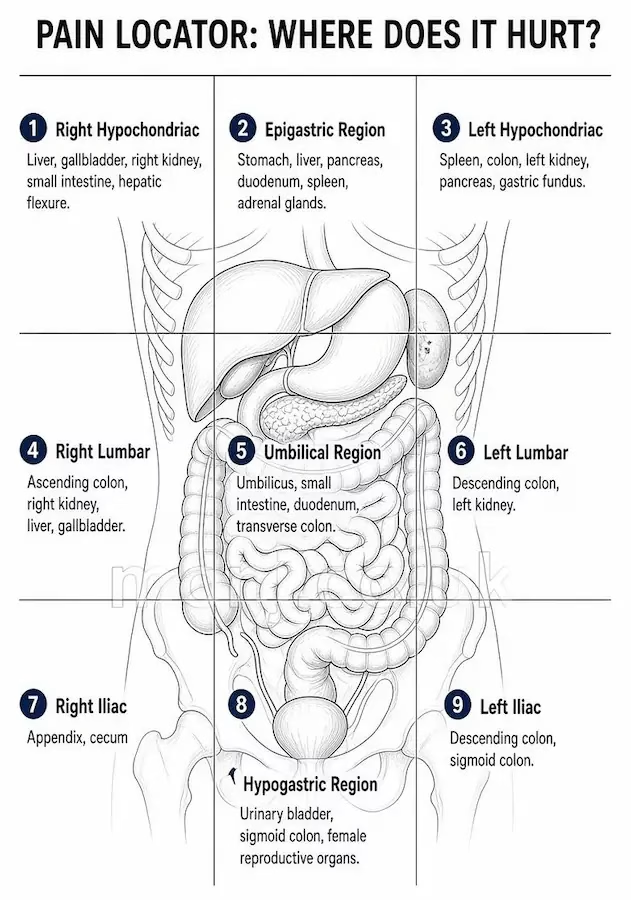
The diagram above splits the abdomen into nine regions, and clinicians use the same map when they assess abdominal pain. Notice where your pain sits before you decide whether it is ordinary.
| Where it sits | What usually causes it on Mounjaro | What to do |
|---|---|---|
| Upper middle, under the breastbone (epigastric, region 2) | Slow stomach emptying, indigestion, reflux, a meal that was too large. The most common site for ordinary treatment discomfort. | Smaller meals, sit upright after eating. Escalate if it becomes severe or bores through to the back. |
| Around the navel (umbilical, region 5) | Trapped wind, early constipation, general gut slowing. | Fluids, fibre, movement. Treat constipation early. |
| Under the right ribs (right hypochondriac, region 1) | Gallbladder. Gallstones are common in weight management and rapid weight loss raises the risk. | Pain that lasts beyond 30 minutes needs NHS 111. Add fever, vomiting or yellowing and it is 999. |
| Upper abdomen with pain spreading to the back | The classic description of acute pancreatitis. Uncommon, but serious. | Same-day assessment. Severe or persistent means 999 or A&E. |
| Lower abdomen, either side or across | Constipation, wind, bowel cramp before diarrhoea. | Usually settles with bowel care. Persistent lower-right pain still needs a clinician, since the appendix sits there. |
What usually helps
- Shrink the portion, not the plate. Serve less and stop at the first sign of fullness. Oversized meals are the single most frequent trigger for pain in the first weeks.
- Slow down. Eating fast pushes more into a stomach that is emptying slowly. Put the fork down between mouthfuls.
- Go easy on fat and spice. Fried, greasy and heavily spiced food sits longest and is the most likely to cause cramp and reflux while you are adjusting.
- Treat constipation before it treats you. A low, aching, bloated abdomen is very often a bowel that has slowed down. Fluids, fibre and movement matter, and a pharmacist can advise on a gentle laxative.
- Stay upright after eating. Lying down within an hour of a meal makes reflux and the heavy feeling worse.
- Do not go up a dose through pain. If discomfort started after a dose increase, tell your prescriber before the next one. Staying on the current dose for longer is a normal and sensible option.
Warning signs that are not ordinary side effects
Ordinary treatment discomfort is mild to moderate, arrives around meals or dose changes, and eases within a few hours. The pattern below is different and needs a clinician:
- Severe pain in the upper abdomen that does not settle
- Pain that spreads through to your back, or up to your right shoulder
- Any abdominal pain lasting longer than 30 minutes
- Pain with repeated vomiting, a high temperature or shivering
- Yellowing of the skin or the whites of the eyes
- Black or tarry stools, or blood in vomit
- A swollen, hard abdomen with no wind or bowel movement
Contact NHS 111 urgently if abdominal pain lasts longer than 30 minutes.
Call 999 or attend A&E for sudden severe abdominal pain, particularly with repeated vomiting, pain spreading into the back, fever, jaundice, confusion, collapse or severe weakness.
Severe, persistent upper abdominal pain that radiates to the back is the textbook presentation of acute pancreatitis, which is uncommon on Mounjaro but serious enough that the leaflet tells you to stop the medicine and seek help. Severe pain under the right ribs points instead to the gallbladder, which has its own guide below.
Read the full guide to pancreatitis warning signs
Evidence update, September 2026: SURPASS-CVOT stomach pain and pancreatic enzyme figures in the revised SmPC
On 8 September 2026 the electronic medicines compendium (eMC) published a revised Mounjaro Summary of Product Characteristics with a text revision date of 29 August 2026. It adds safety results from SURPASS-CVOT, a large trial that compared tirzepatide with dulaglutide, another injectable diabetes medicine, in adults with type 2 diabetes and established cardiovascular disease. The study-specific figures relevant to this page are:
- Abdominal pain: 10.5% of participants taking tirzepatide
- For context, the same study reported nausea in 25.1%, diarrhoea in 24.9%, constipation in 12.8% and vomiting in 11.6%
- Gallstones (cholelithiasis): 2.4%
- Pancreatic enzymes: at month 36, mean amylase was 29% higher and mean lipase 28% higher than at the start of treatment
Raised enzymes are not the same as pancreatitis
Amylase and lipase are pancreatic enzymes measured in a blood test. A rise in these enzymes is a known laboratory finding with GLP-1 and GIP/GLP-1 medicines and is reported separately from pancreatitis in the SmPC. On its own, a raised amylase or lipase result does not predict acute pancreatitis and is not a diagnosis of it. Pancreatitis is diagnosed on the combination of symptoms, examination and tests, which is why the warning on this page is built around the symptom: severe, persistent pain in the upper abdomen, which may spread to the back. That emergency advice is unchanged by these figures.
Source: Mounjaro Summary of Product Characteristics (eMC), text revised 29 August 2026, sections 4.4 and 4.8
Common questions
Is stomach pain on Mounjaro normal?
Mild to moderate stomach pain is very common in weight management, reported by more than 1 in 10 people. It is usually worst in the first weeks and after a dose increase, and it typically settles at a steady dose. Severe pain, pain lasting more than 30 minutes, or pain spreading to the back or right shoulder is not ordinary and needs urgent assessment.
How long does Mounjaro stomach pain last?
Pain tied to a single meal usually eases within a few hours. Pain tied to starting treatment or a dose increase commonly settles over one to three weeks as the body adjusts. Pain that is getting worse, or that persists at a steady dose, should be reviewed by your prescriber rather than waited out.
Where is Mounjaro stomach pain usually felt?
Most ordinary treatment discomfort is central: under the breastbone or around the navel, where the stomach and small intestine sit. Pain that settles under the right ribs is more likely to involve the gallbladder, and pain in the upper abdomen that spreads to the back is the pattern associated with pancreatitis. Both of those patterns need a clinician.
Is stomach pain more common on diabetes or weight-loss doses?
The leaflet reports it by the population studied rather than by dose. Abdominal pain is very common in weight management, common in adults treated for type 2 diabetes, and very common again in the type 2 diabetes cardiovascular disease study and in children and adolescents treated for type 2 diabetes. If you take Mounjaro for weight loss, use the weight-management figure.
When should stomach pain make me stop taking Mounjaro?
Do not stop or change a prescribed medicine on your own unless you have the warning signs of pancreatitis, where the leaflet itself says to stop and seek medical help. Otherwise contact your prescriber if pain is persistent, severe or worsening, and use NHS 111 or 999 for the warning signs listed above. Your prescriber can advise on whether to hold a dose, stay at your current dose or look for another cause.
How this page was checked. Frequencies are taken directly from the Mounjaro KwikPen UK patient leaflet revised in August 2026 and cross-checked against section 4.8 of the Summary of Product Characteristics on the eMC (record 15481). Weight-management readers are the audience, so diabetes and cardiovascular-study figures are always labelled as such. Monj is an independent price comparison service and does not prescribe or dispense medicines. If you spot an error, use the corrections route on our editorial and review policy.
Related guides
Sources: Mounjaro KwikPen UK Patient Information Leaflet, revised August 2026 (eMC) • Mounjaro Summary of Product Characteristics, text revised 29 August 2026 (eMC) • NHS: Tirzepatide • NHS: Acute pancreatitis
Explore other side effects
Tap a point on the body to jump to that symptom, or choose from the full list below. The pink marker shows where you are now.
© 2026 Medstack Ltd. Written and published by Monj (monj.co.uk). You are welcome to link to this page or quote a short extract with a credit and a link. Republishing the text, page structure, safety-routing design or price data, in whole or in part, including to train or ground an automated system, is not permitted without written permission. See our independence statement and editorial and review policy.
Sources referenced on this page
Linked from the text above:
- Mounjaro Summary of Product Characteristics (eMC), text revised 29 August 2026, sections 4.4 and 4.8 www.medicines.org.uk
- Mounjaro KwikPen UK Patient Information Leaflet, revised August 2026 (eMC) www.medicines.org.uk
- NHS: Tirzepatide www.nhs.uk
- NHS: Acute pancreatitis www.nhs.uk
Standing primary references for every Monj page:
- Mounjaro (tirzepatide) Summary of Product Characteristics and Patient Information Leaflet, electronic medicines compendium
- MHRA Drug Safety Update: GLP-1 receptor agonists
- NICE TA1026: tirzepatide for managing overweight and obesity
- General Pharmaceutical Council register of pharmacies
- MHRA Yellow Card scheme